From Ambassador (The Story of Noni Juice)
2025/11/27
The story of Noni Juice
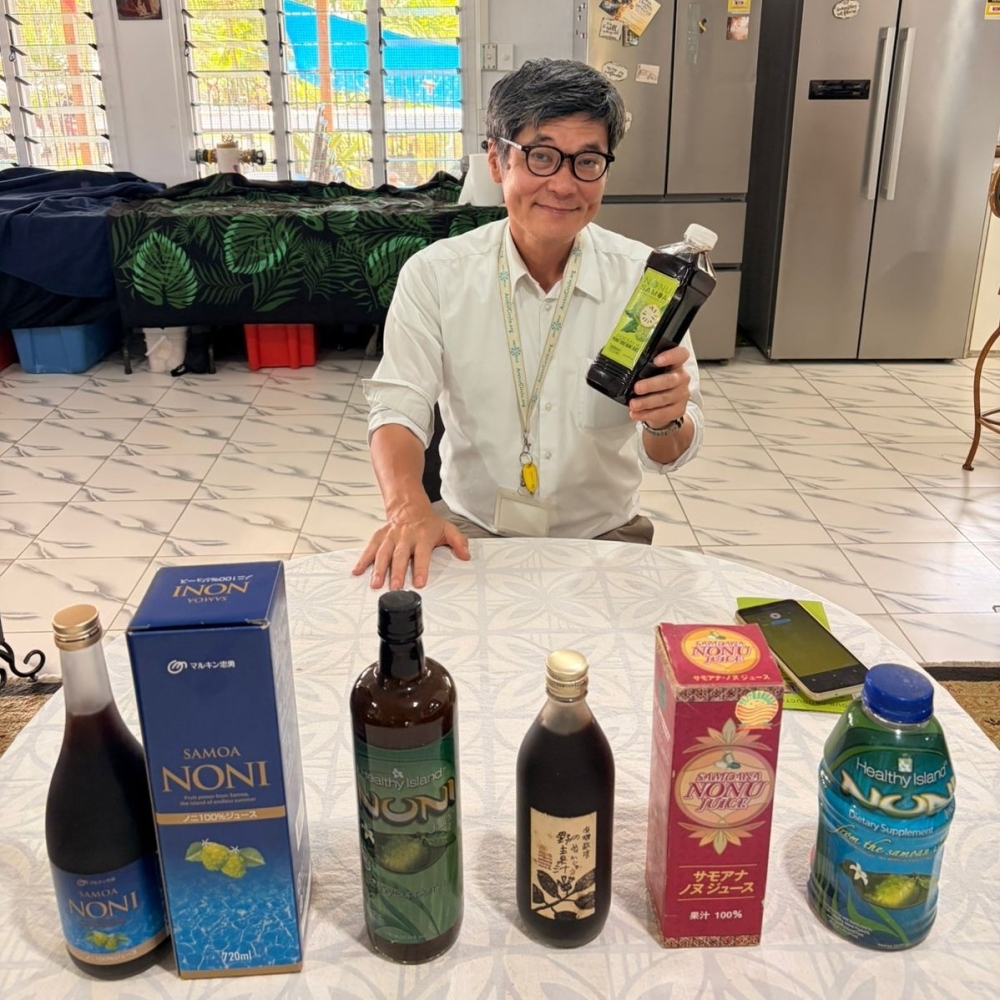
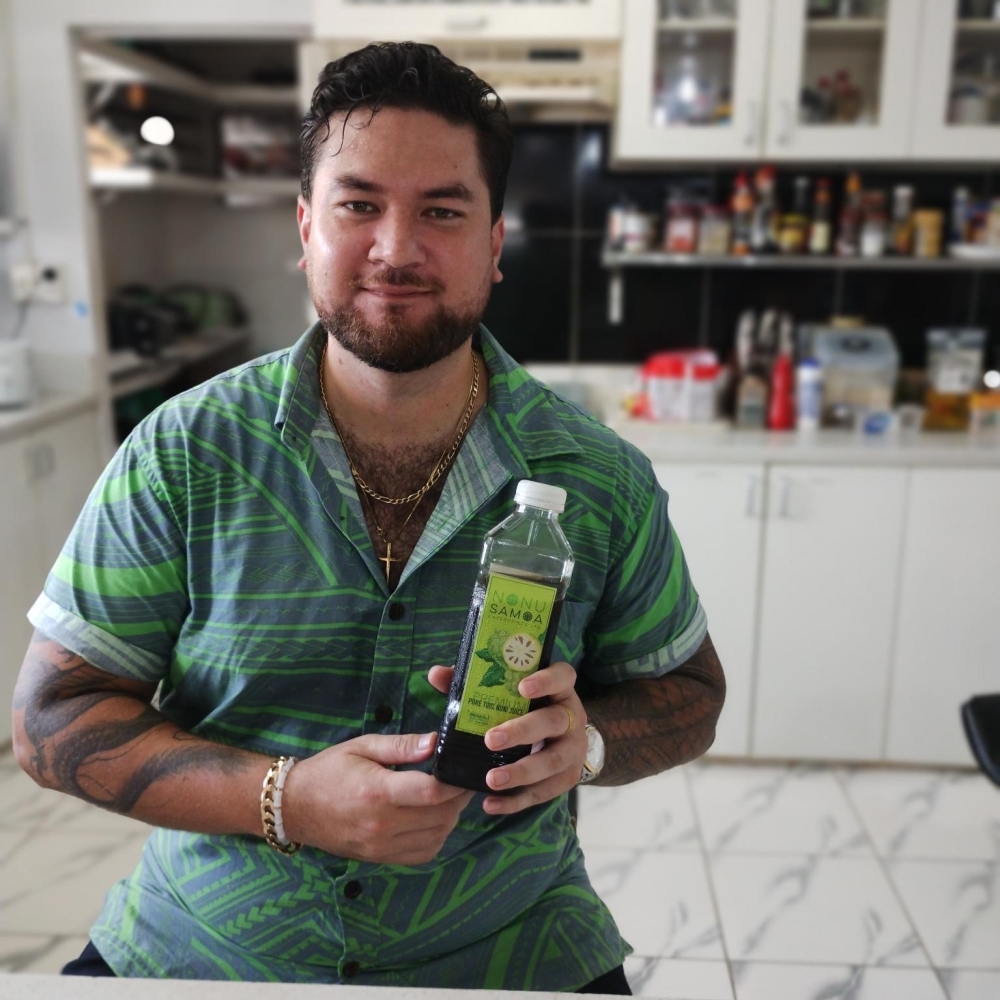
I recently visited a company in Samoa that manufactures and sells noni juice. Pictured proudly holding a one-liter bottle of their own noni juice is Mr. Nico Vui. He is the Director and Chief Financial Officer (CFO) of Nonu Samoa Enterprise Limited. Mr. Vui experienced a homestay in Fukuoka when he was 11 years old. Since then, he has maintained deep ties with Japan, and until about a year and a half before returning to Samoa, he served as a commercial officer at the Samoan Embassy in Tokyo. He is also very fluent in Japanese. Nonu Samoa was founded by his grandfather, and his parents inherited the management of the company. Although he is currently fully dedicated to managing this company, he said that if the opportunity arises, he would like to continue to serve as a bridge between Samoan and Japanese businesses in the future.
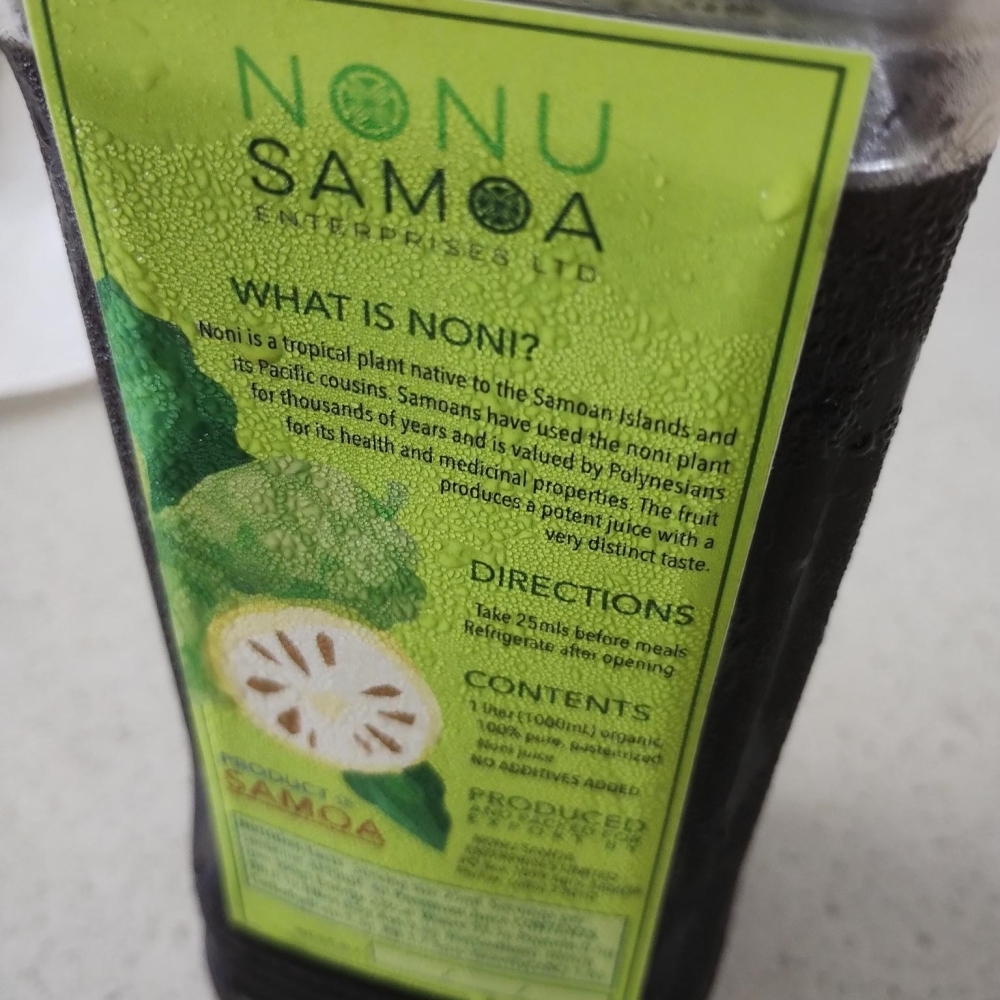
While "noni" may not be very familiar in Japan, it is a fruit of an evergreen tree native to Indonesia, growing in tropical and subtropical regions such as Southeast Asia and Australia. It also appears to grow in Japan, particularly in Okinawa Prefecture and the Ogasawara Islands of Tokyo.
In fact, the name "noni" is its Hawaiian designation. In Samoa, Tonga, and the Cook Islands, it is commonly called "nonu." It is also known by various other names, including Morinda, Yaeyama Aokii, and Indian Mulberry. Its scientific name is Morinda citrifolia. Here, we will refer to it by the name "noni," which is widely used in Japan. The extract obtained from it has been used as a dye and medicine in various regions since ancient times, and it has been affectionately called the "tree for all ills" in Indonesia and the "gift from God" in Polynesia.
Noni contains approximately 140 types of active ingredients, including natural amino acids, B vitamins, and minerals. It is said to offer various benefits such as prevention and improvement of lifestyle-related diseases, infection prevention, and skin beautification effects.
The company naturally ferments pesticide-free cultivated and harvested noni fruits, crushes and presses them, and then further ferments the extracted essence (i.e., noni juice). This is then packed into large 1000-liter containers and exported to countries such as South Korea, the U.S., and Japan. They also ship bottled products for domestic consumption.
I also had the opportunity to taste it on the spot. The unprocessed raw noni juice had a somewhat peculiar taste, like soy sauce without salt. Additionally, they reportedly plan to sell a version blended with pineapple juice for the Japanese market, making it easier to drink.
Hopefully, it will become popular as a health supplement.
I recently visited a company in Samoa that manufactures and sells noni juice. Pictured proudly holding a one-liter bottle of their own noni juice is Mr. Nico Vui. He is the Director and Chief Financial Officer (CFO) of Nonu Samoa Enterprise Limited. Mr. Vui experienced a homestay in Fukuoka when he was 11 years old. Since then, he has maintained deep ties with Japan, and until about a year and a half before returning to Samoa, he served as a commercial officer at the Samoan Embassy in Tokyo. He is also very fluent in Japanese. Nonu Samoa was founded by his grandfather, and his parents inherited the management of the company. Although he is currently fully dedicated to managing this company, he said that if the opportunity arises, he would like to continue to serve as a bridge between Samoan and Japanese businesses in the future.
While "noni" may not be very familiar in Japan, it is a fruit of an evergreen tree native to Indonesia, growing in tropical and subtropical regions such as Southeast Asia and Australia. It also appears to grow in Japan, particularly in Okinawa Prefecture and the Ogasawara Islands of Tokyo.
In fact, the name "noni" is its Hawaiian designation. In Samoa, Tonga, and the Cook Islands, it is commonly called "nonu." It is also known by various other names, including Morinda, Yaeyama Aokii, and Indian Mulberry. Its scientific name is Morinda citrifolia. Here, we will refer to it by the name "noni," which is widely used in Japan. The extract obtained from it has been used as a dye and medicine in various regions since ancient times, and it has been affectionately called the "tree for all ills" in Indonesia and the "gift from God" in Polynesia.
Noni contains approximately 140 types of active ingredients, including natural amino acids, B vitamins, and minerals. It is said to offer various benefits such as prevention and improvement of lifestyle-related diseases, infection prevention, and skin beautification effects.
The company naturally ferments pesticide-free cultivated and harvested noni fruits, crushes and presses them, and then further ferments the extracted essence (i.e., noni juice). This is then packed into large 1000-liter containers and exported to countries such as South Korea, the U.S., and Japan. They also ship bottled products for domestic consumption.
I also had the opportunity to taste it on the spot. The unprocessed raw noni juice had a somewhat peculiar taste, like soy sauce without salt. Additionally, they reportedly plan to sell a version blended with pineapple juice for the Japanese market, making it easier to drink.
Hopefully, it will become popular as a health supplement.