
From Ambassador (The story of the GAUALOFA)
2025/12/16
The story of the GAUALOFA
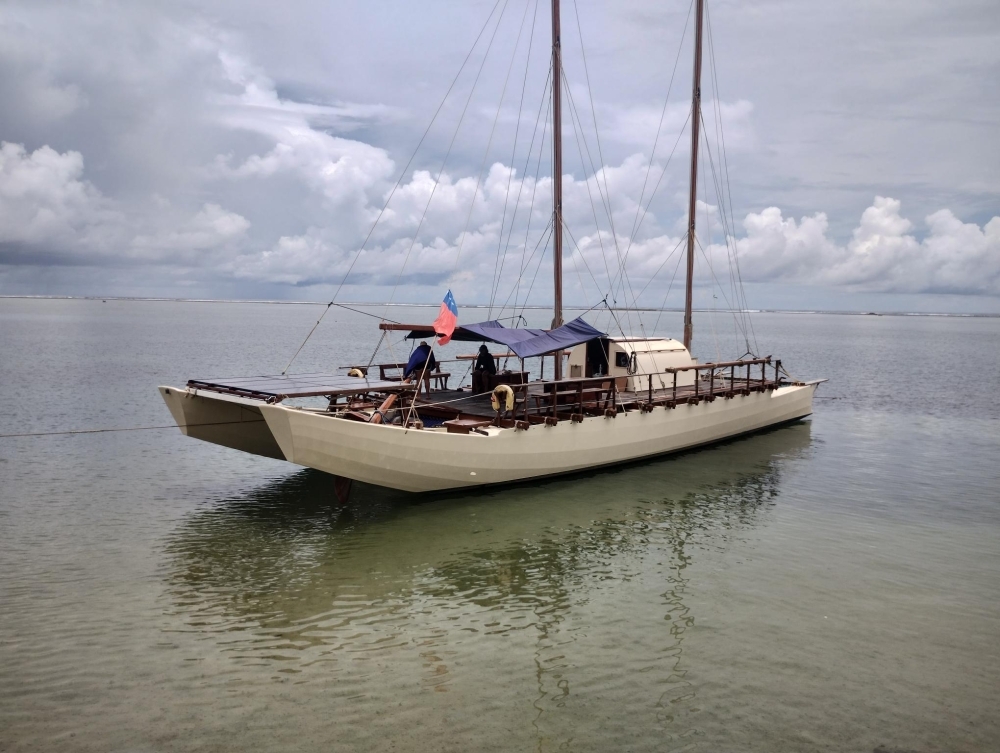
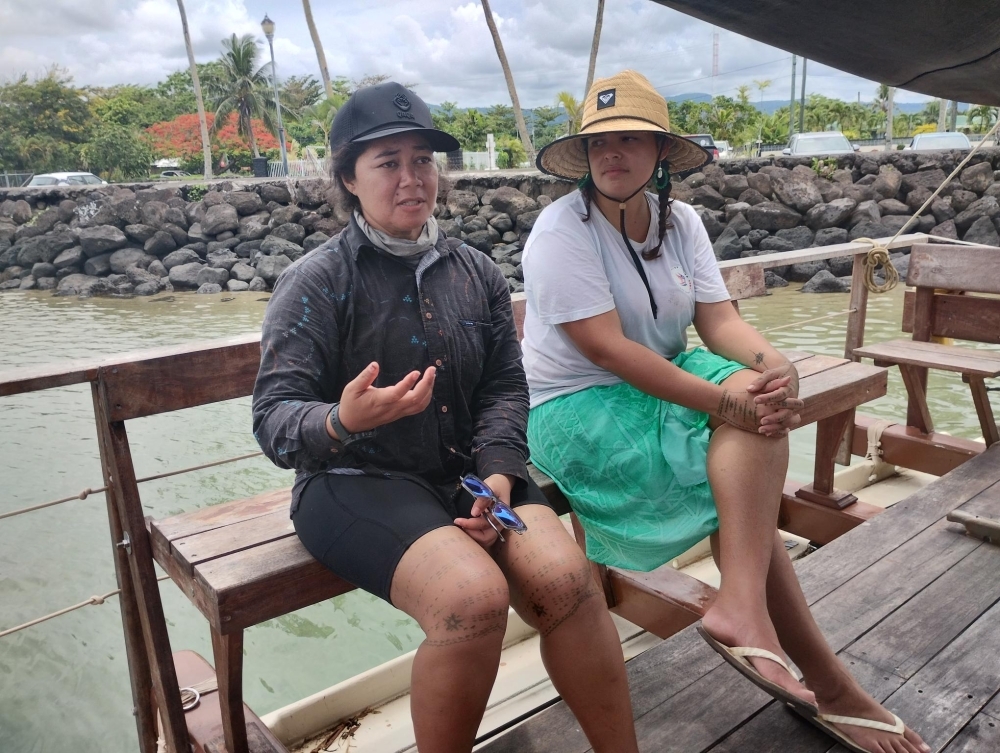
At the invitation of the Samoa Voyaging Society, I recently boarded a ship owned and operated by the society. That ship is the GAUALOFA, pictured. Its name, literally translated, means "wind of love." This 22-meter-long catamaran is a "sailboat" that uses wind as its primary propulsion. The twin-hulled design seems to be traditional in Polynesia, and similar small, hand-paddled canoes are often seen in Samoa. It is said to be one of the ships built with funding from a New Zealand foundation in 2009, and it was donated to Samoa in 2012 to celebrate the 50th anniversary of Samoa's independence, where it remains to this day. Although its shape is traditional, materials such as fiberglass are used in its construction. The woman in the photo on the left is Fealofani Bruun, the captain of this ship.
One of the founding objectives of the Voyaging Society is to revive and pass on traditional Polynesian navigation techniques. They are working to preserve and transmit to the next generation the ancient "Wayfinding" technology, which relies on stars, wind, and wave patterns for navigation. Similar organizations exist in other Pacific island nations, and they reportedly have exchanges with each other. With this ship, it is no longer a dream to voyage across the open sea from island to island, relying on the wind, just as ancient Polynesian navigators did.
On the other hand, even with a ship, undertaking long-distance voyages is not easy. The ship has a capacity of 16 people, but its operation requires a minimum of 6 crew members. The society is also working on training crew members, but when planning an offshore voyage, it is necessary to secure experienced crew members who can operate this type of large yacht for a long period, which places a heavy burden on volunteer crew members who also have other jobs. Although no fuel is used, provisions for the crew's livelihood, food, and water are naturally necessary during the voyage. Funding is required for this. The society's current main activities are environmental protection awareness and education, primarily for young people. They visit villages throughout the country, allow people to board the ship, and advocate for the protection and cultivation of coral, which is damaged by global warming and human activities.
Maintaining a ship also incurs costs beyond what one might imagine. Every few years, it requires a “dry dock”—where the ship is hauled ashore for a full inspection and repair of the entire hull, including the bottom. After this open day, they mentioned this repair work would take some time.
At the invitation of the Samoa Voyaging Society, I recently boarded a ship owned and operated by the society. That ship is the GAUALOFA, pictured. Its name, literally translated, means "wind of love." This 22-meter-long catamaran is a "sailboat" that uses wind as its primary propulsion. The twin-hulled design seems to be traditional in Polynesia, and similar small, hand-paddled canoes are often seen in Samoa. It is said to be one of the ships built with funding from a New Zealand foundation in 2009, and it was donated to Samoa in 2012 to celebrate the 50th anniversary of Samoa's independence, where it remains to this day. Although its shape is traditional, materials such as fiberglass are used in its construction. The woman in the photo on the left is Fealofani Bruun, the captain of this ship.
One of the founding objectives of the Voyaging Society is to revive and pass on traditional Polynesian navigation techniques. They are working to preserve and transmit to the next generation the ancient "Wayfinding" technology, which relies on stars, wind, and wave patterns for navigation. Similar organizations exist in other Pacific island nations, and they reportedly have exchanges with each other. With this ship, it is no longer a dream to voyage across the open sea from island to island, relying on the wind, just as ancient Polynesian navigators did.
On the other hand, even with a ship, undertaking long-distance voyages is not easy. The ship has a capacity of 16 people, but its operation requires a minimum of 6 crew members. The society is also working on training crew members, but when planning an offshore voyage, it is necessary to secure experienced crew members who can operate this type of large yacht for a long period, which places a heavy burden on volunteer crew members who also have other jobs. Although no fuel is used, provisions for the crew's livelihood, food, and water are naturally necessary during the voyage. Funding is required for this. The society's current main activities are environmental protection awareness and education, primarily for young people. They visit villages throughout the country, allow people to board the ship, and advocate for the protection and cultivation of coral, which is damaged by global warming and human activities.
Maintaining a ship also incurs costs beyond what one might imagine. Every few years, it requires a “dry dock”—where the ship is hauled ashore for a full inspection and repair of the entire hull, including the bottom. After this open day, they mentioned this repair work would take some time.