Message from Ambassador (Regarding Hiroshima's Atomic Bomb Memorial Cenotaph)
2026/4/24
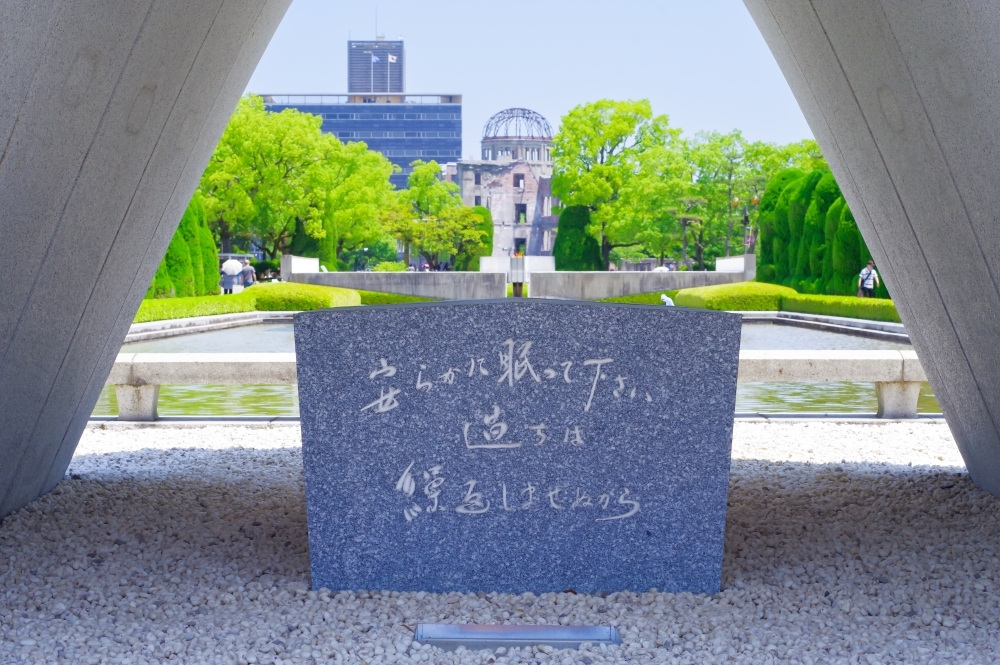 the Memorial Cenotaph for the Atomic Bomb Victims.
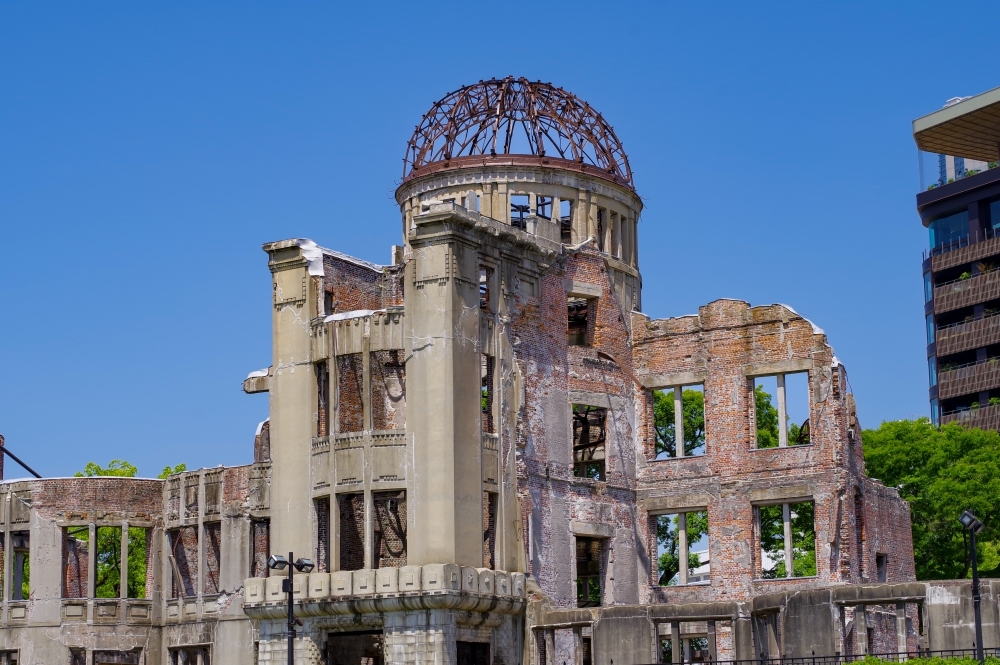 the Atomic Bomb Dome
Regarding Hiroshima's Atomic Bomb Memorial Cenotaph
In the previous article, I wrote about the increasing number of tourists visiting Japan.
So, where in Japan should you visit?
Many tourists visiting Japan first head to the capital city, Tokyo. While Tokyo is vast, the Asakusa area, which retains the feel of "Edo" (the former name for Tokyo), is particularly popular among foreign visitors. Some with a little more time in their itinerary also visit Hakone, a nearby hot spring resort. And by taking the Shinkansen (bullet train), it's possible to visit major tourist attractions in the Kansai region, such as Kyoto, Osaka, and Nara.
However, when visiting Japan, please also keep in mind Hiroshima, located further west from Osaka.
At 8:15 AM on August 6, 1945, the atomic bomb was dropped on Hiroshima for the first time in human history in actual combat. Many people lost their lives in an instant. Those who miraculously survived suffered from severe burns and radiation exposure. To ensure this memory is never forgotten, Hiroshima City has the Peace Memorial Park, the Peace Memorial Museum, the Atomic Bomb Dome (A-bomb Dome), and the Memorial Cenotaph for the Atomic Bomb Victims.
The following inscription is carved on the cenotaph:
**"安らかに眠って下さい 過ちは繰り返しませぬから"**
(Let all the souls here rest in peace; For we shall not repeat the evil.)
While a famous inscription, this particular line has, in the past, drawn criticism.
Critics questioned: Who is the subject of the latter part of the sentence, "we"? Is it the Japanese people? The citizens of Hiroshima? Since it is the U.S. military who dropped the bomb, why should the Japanese regret "the evil" and apologize to the spirits of the victims?
After years of debate, Hiroshima City issued a statement clarifying that the subject of this inscription is "all humanity," and that the inscription serves as a warning and admonition to humankind. Since this clarification was issued, the generally accepted interpretation of the inscription's intent is that it transcends the boundaries of specific nations like "Japan" or "America," serving as a pledge for all human beings never to repeat nuclear war.
Furthermore, I believe this inscription can also be interpreted as a universal pledge for non-aggression, not limited to the use of nuclear weapons or nuclear war, but broadly against "war" where humans kill each other, especially the crime of "wars of aggression," vowing never to repeat them. Indeed, I would prefer to support such an interpretation.
With the increase in inbound tourists, people from all over the world now can visit this place.
If you have the chance, I hope you will extend your trip to Hiroshima and reflect on this Atomic Bomb Memorial Cenotaph.
In the previous article, I wrote about the increasing number of tourists visiting Japan.
So, where in Japan should you visit?
Many tourists visiting Japan first head to the capital city, Tokyo. While Tokyo is vast, the Asakusa area, which retains the feel of "Edo" (the former name for Tokyo), is particularly popular among foreign visitors. Some with a little more time in their itinerary also visit Hakone, a nearby hot spring resort. And by taking the Shinkansen (bullet train), it's possible to visit major tourist attractions in the Kansai region, such as Kyoto, Osaka, and Nara.
However, when visiting Japan, please also keep in mind Hiroshima, located further west from Osaka.
At 8:15 AM on August 6, 1945, the atomic bomb was dropped on Hiroshima for the first time in human history in actual combat. Many people lost their lives in an instant. Those who miraculously survived suffered from severe burns and radiation exposure. To ensure this memory is never forgotten, Hiroshima City has the Peace Memorial Park, the Peace Memorial Museum, the Atomic Bomb Dome (A-bomb Dome), and the Memorial Cenotaph for the Atomic Bomb Victims.
The following inscription is carved on the cenotaph:
**"安らかに眠って下さい 過ちは繰り返しませぬから"**
(Let all the souls here rest in peace; For we shall not repeat the evil.)
While a famous inscription, this particular line has, in the past, drawn criticism.
Critics questioned: Who is the subject of the latter part of the sentence, "we"? Is it the Japanese people? The citizens of Hiroshima? Since it is the U.S. military who dropped the bomb, why should the Japanese regret "the evil" and apologize to the spirits of the victims?
After years of debate, Hiroshima City issued a statement clarifying that the subject of this inscription is "all humanity," and that the inscription serves as a warning and admonition to humankind. Since this clarification was issued, the generally accepted interpretation of the inscription's intent is that it transcends the boundaries of specific nations like "Japan" or "America," serving as a pledge for all human beings never to repeat nuclear war.
Furthermore, I believe this inscription can also be interpreted as a universal pledge for non-aggression, not limited to the use of nuclear weapons or nuclear war, but broadly against "war" where humans kill each other, especially the crime of "wars of aggression," vowing never to repeat them. Indeed, I would prefer to support such an interpretation.
With the increase in inbound tourists, people from all over the world now can visit this place.
If you have the chance, I hope you will extend your trip to Hiroshima and reflect on this Atomic Bomb Memorial Cenotaph.